Skip to content

Page 25 of 58

Latest

  • Using Scenario Planning to Reshape Strategy

    Rather than trying to predict the future, organizations need to strengthen their abilities to cope with uncertainty. A new approach to scenario planning can help companies reframe their long-term strategies by developing several plausible scenarios.

    Learn More »
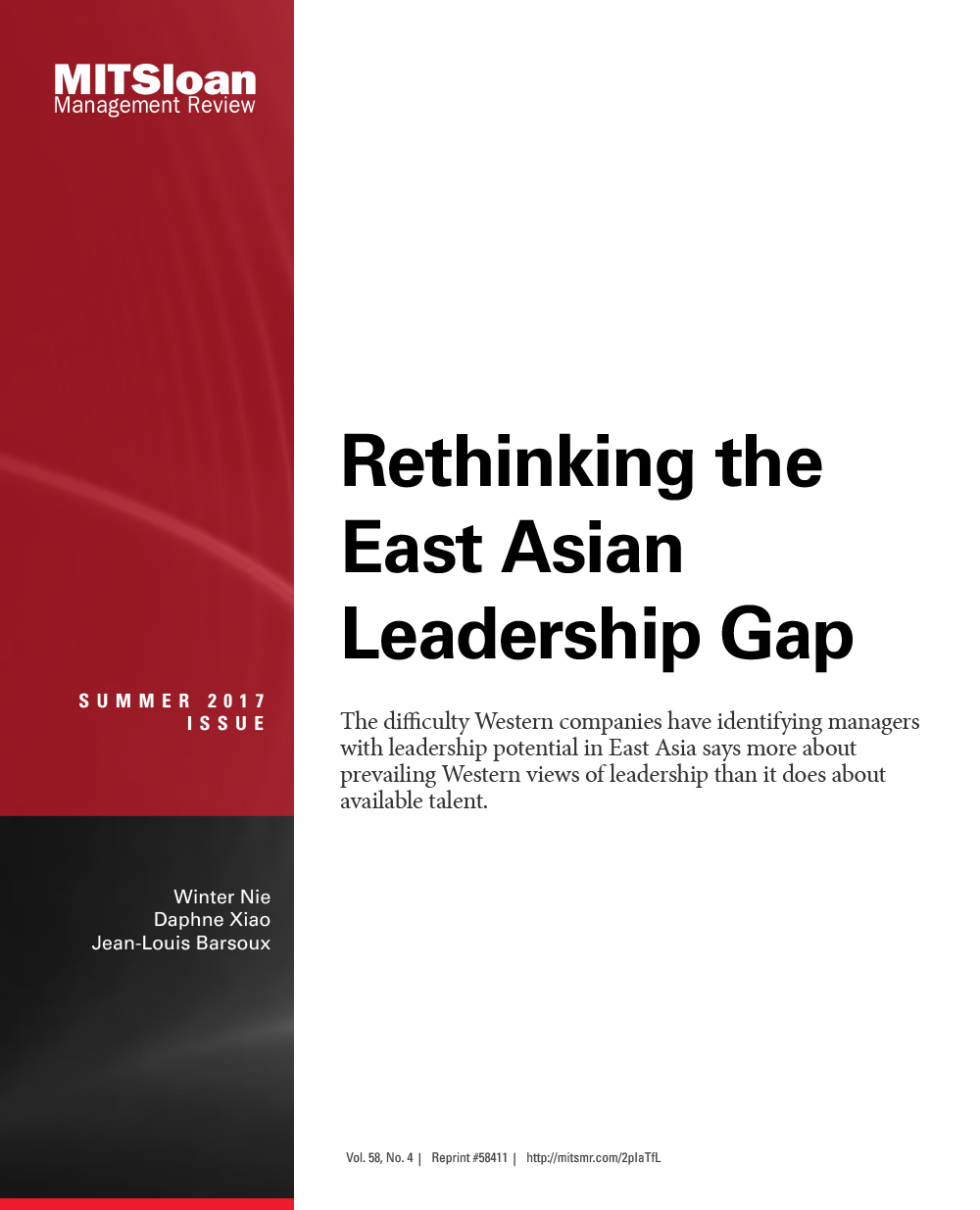
  • Rethinking the East Asian Leadership Gap

    The difficulty Western companies have identifying managers with leadership potential in East Asia says more about prevailing Western views of leadership than it does about available talent.

    Learn More »
  • What You Need to Know Before Starting a Platform Business

    There’s a great deal of enthusiasm about platform strategies these days. Entrepreneurs pitch their startups as the next Uber, the next Facebook, or the next Airbnb, while executives in established companies are retooling their strategies around platforms to drive growth and compete digitally. But creating a successful platform business is not easy — as economists Richard Schmalensee and David S. Evans explain in this MIT Sloan Management Review interview.

    Learn More »
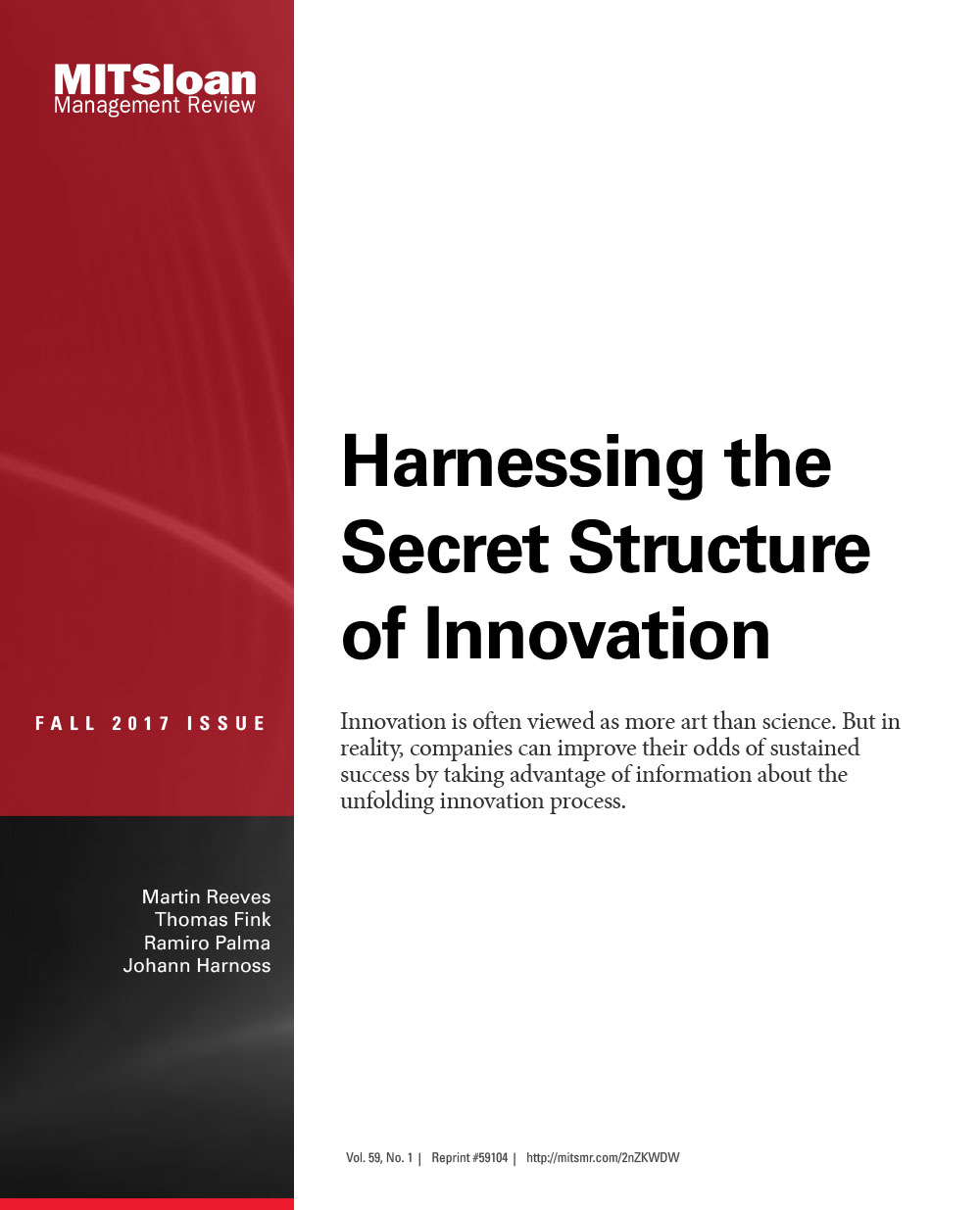
  • Harnessing the Secret Structure of Innovation

    Innovation, much like marketing and human resources, can be made less reliant on artful intuition by using information in new ways. But this requires a change in perspective: We need to view innovation not as the product of luck or extraordinary vision but as the result of a deliberate search process.

    Learn More »
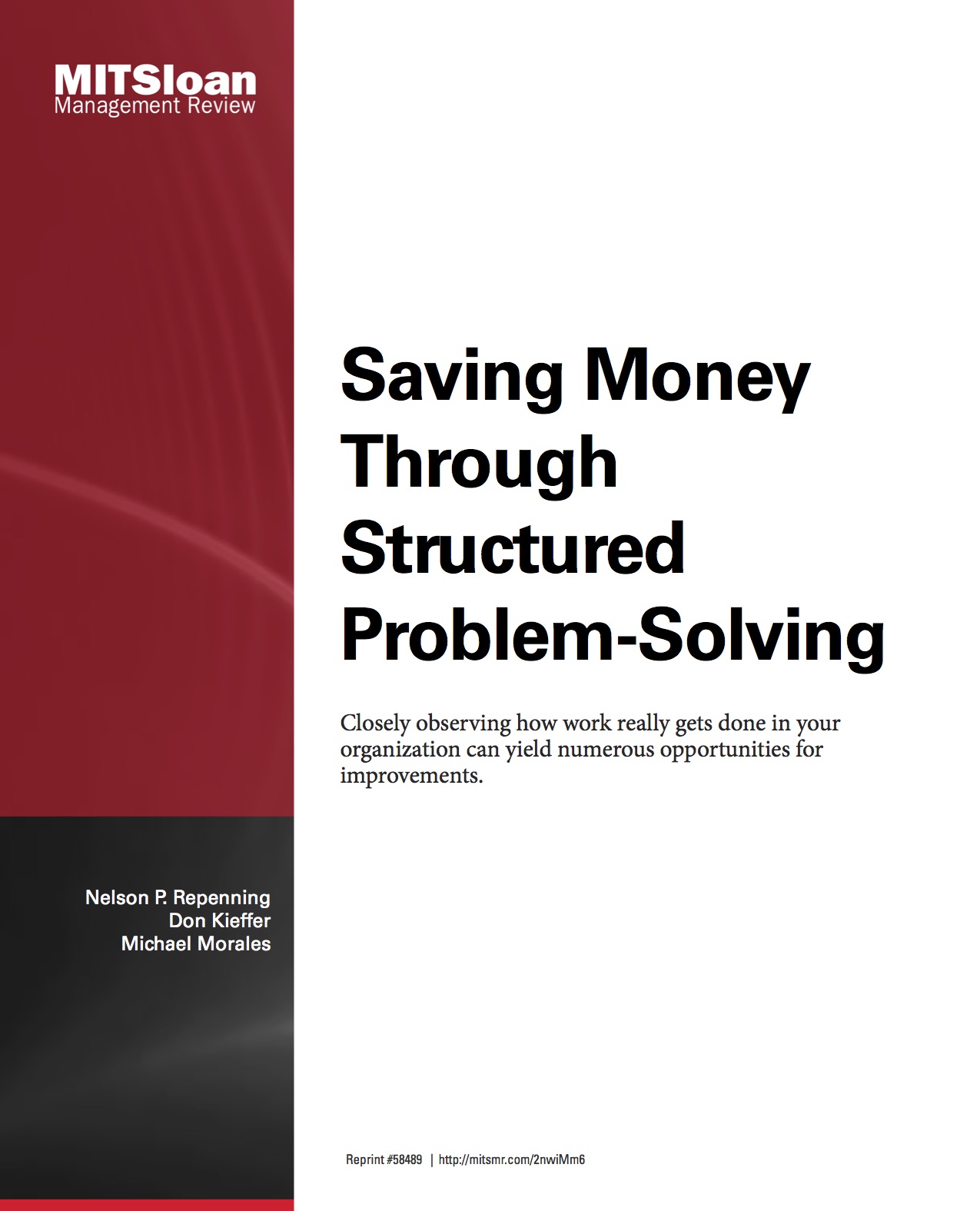
  • Saving Money through Structured Problem Solving

    As busy as they are, leaders need to find ways to observe fundamental work processes in their organizations. When they do, they usually discover that there are gaps between theory and reality in how works get done. Michael Morales’ experience — in which identifying and addressing such gaps led to his company saving $50,000 in just 60 days — is a case in point.

    Learn More »
  • The Big Squeeze: How Compression Threatens Old Industries

    Accelerating compression of both revenues and profits may rapidly prove fatal to traditional businesses. Consider the accelerating decline of voice calls as a means of communicating via mobile telephone: From 2013 to 2015, average mobile voice revenue per user declined globally by 19%, and a further decline of 26% is expected through 2020. To stave off disaster, incumbents must transform and renew their core operations — while also growing into new businesses and industries.

    Learn More »
  • The Flare and Focus of Successful Futurists

    Any organization intent on surviving and thriving into the future must follow a disciplined approach to “flaring” and “focusing,” as it alternates between broadly imagining and vigorously challenging the possibilities.

    Learn More »
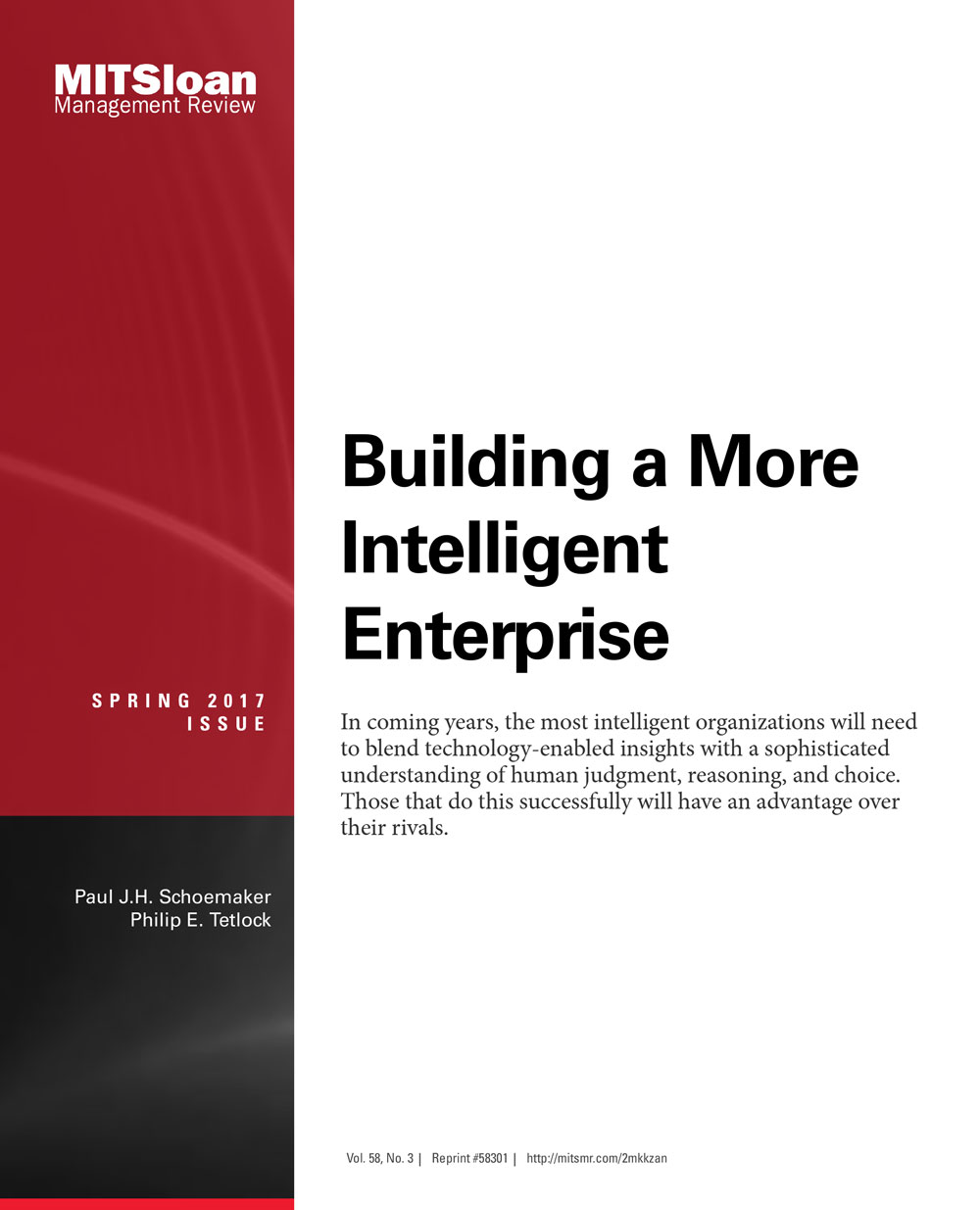
  • Building a More Intelligent Enterprise

    The authors examine how managers can combine a sophisticated understanding of human decision making with technology-enabled insights to make smarter choices in the face of uncertainty and complexity. Integrating the two streams of knowledge is not easy, but once management teams learn how to blend them, the advantages can be substantial.

    Learn More »
  • Why Can't We Have More Than One Digital Strategy

    A recent MIT Sloan Management Review article argued that companies need to choose whether to focus their digital strategy on customer engagement or digitized solutions. But several readers wondered why they needed to choose one option over the other.

    Learn More »
  • To Improve Cybersecurity, Think Like a Hacker

    To combat cyberattacks, companies need to understand both hackers’ tactics and their mindsets.

    Learn More »